Art Techniques of Our Exquisite Pollution

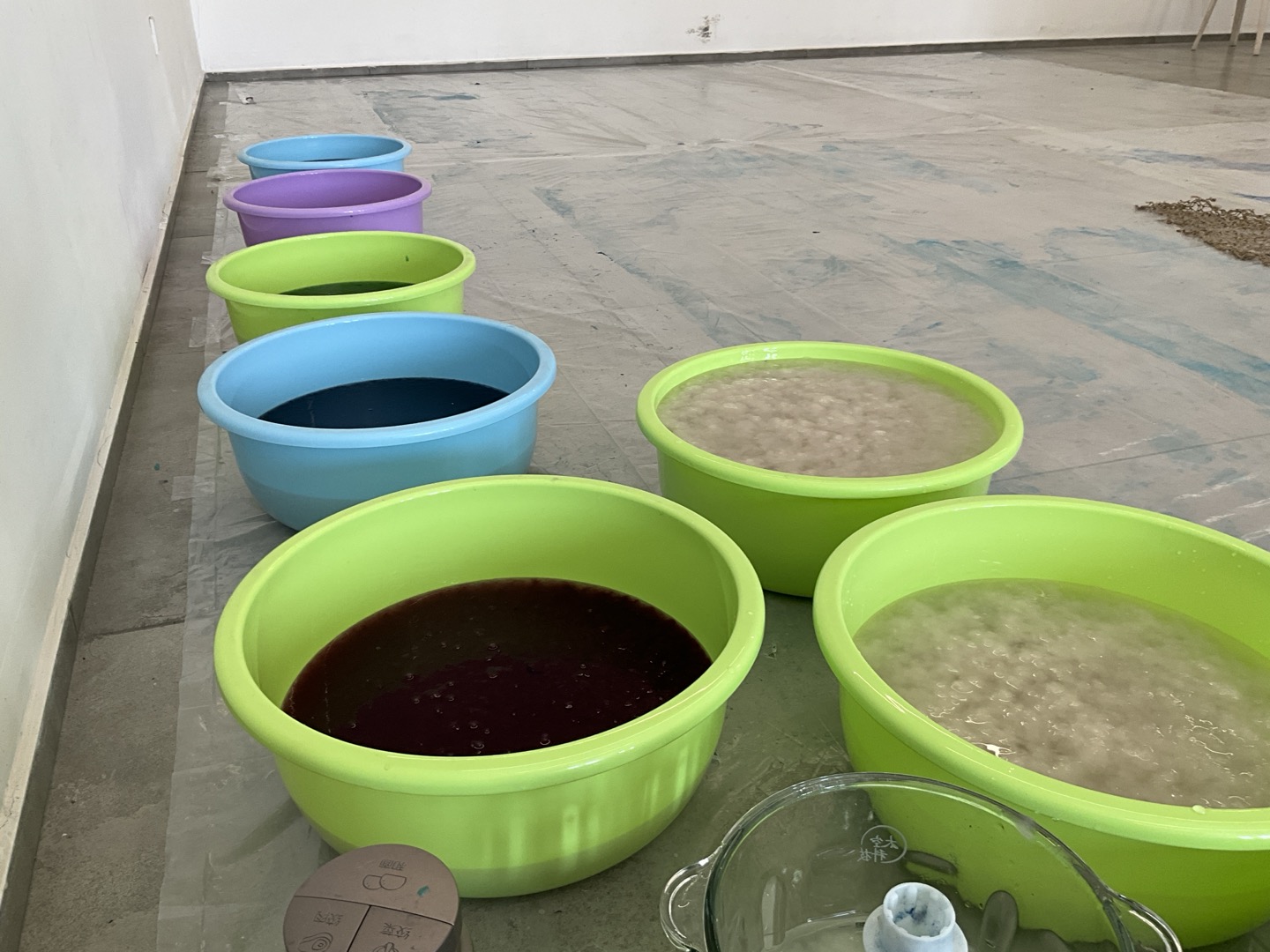
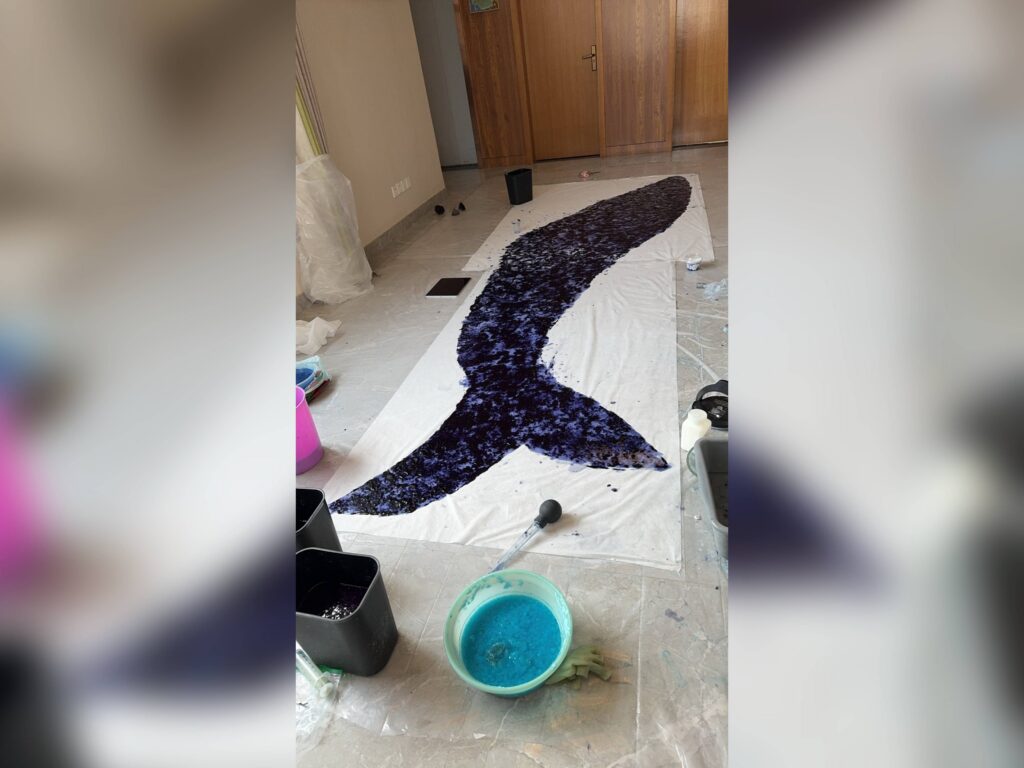
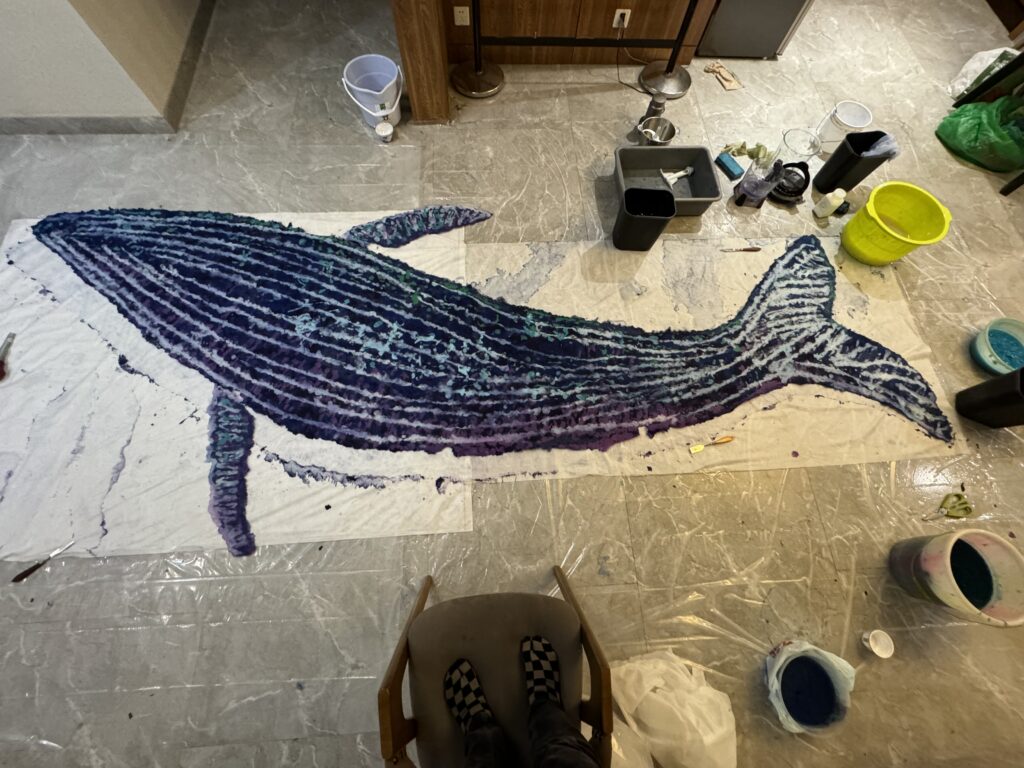
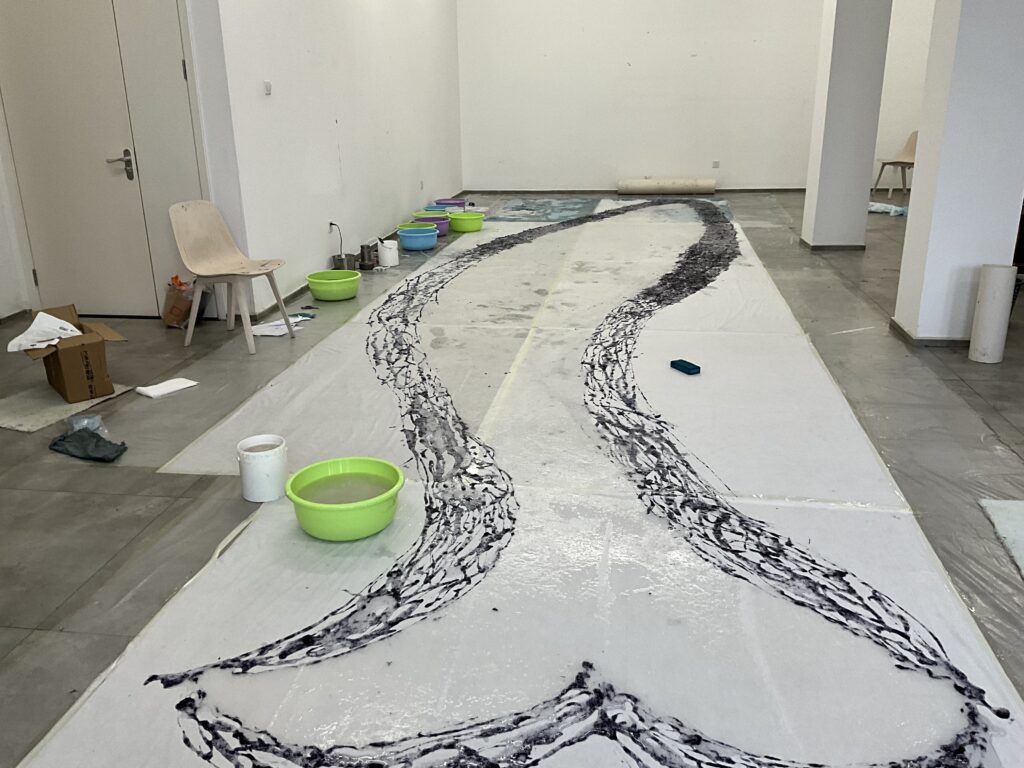
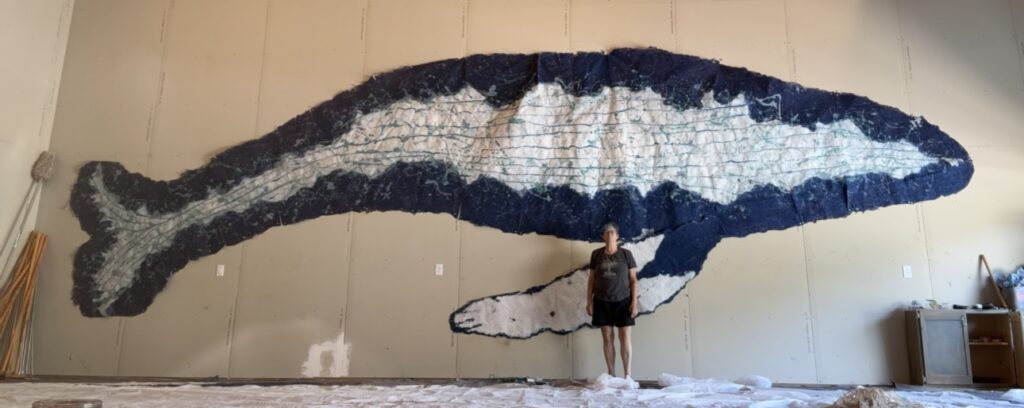
What started as a single thought about plastics in the ocean swelled into a vision so big it pushed me out of my studio and across the world. My home studio was far too small to hold the scale this idea demanded, so I spent a month in China with my friend Li Yang, using her studio to begin the first components: a fifteen‑foot handmade‑paper whale and two sculpted waves. From there I moved to the Meng Feng Residency in Cao Chundi, Beijing, where the work gathered momentum. I blended and dyed pulps in small batches, poured them into bowls on the floor, protected the studio with plastic, and used a turkey baster to outline and fill the whale forms. Each layer took eight hours and had to partially dry before the next could begin. As the whale grew, word spread through the artist community, and people began stopping by the studio to see this enormous paper creature taking shape. By the end of two months, the installation had taken on a life of its own — two whales and three waves, all rolled into a tube so I could carry them home on the plane.
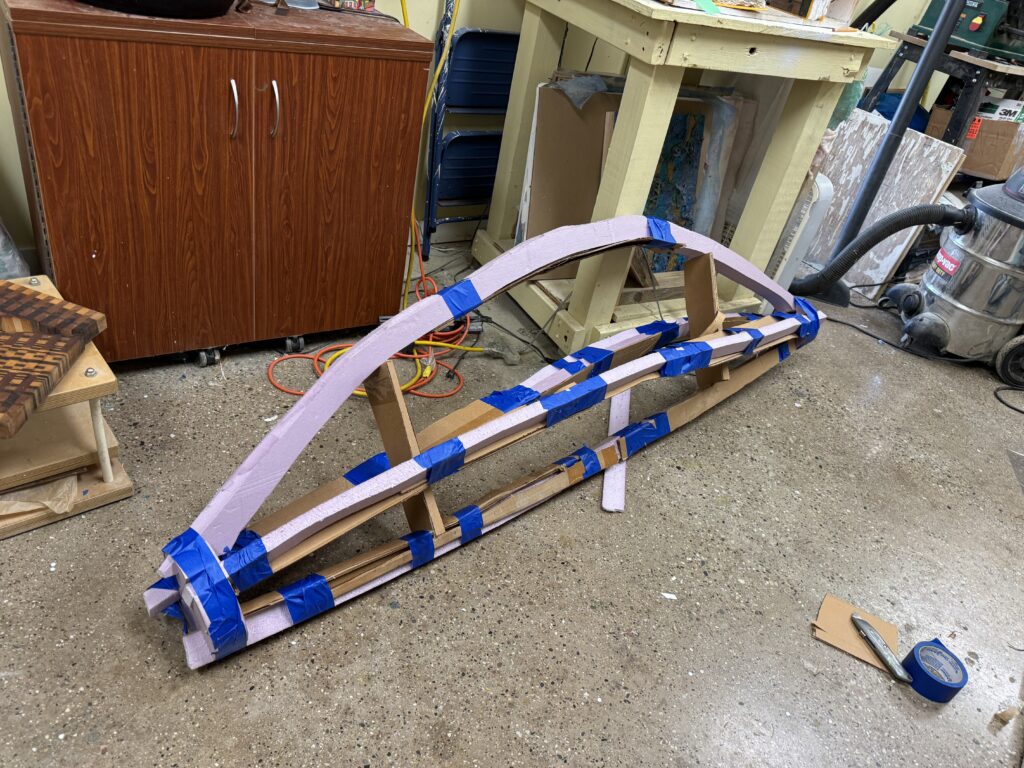
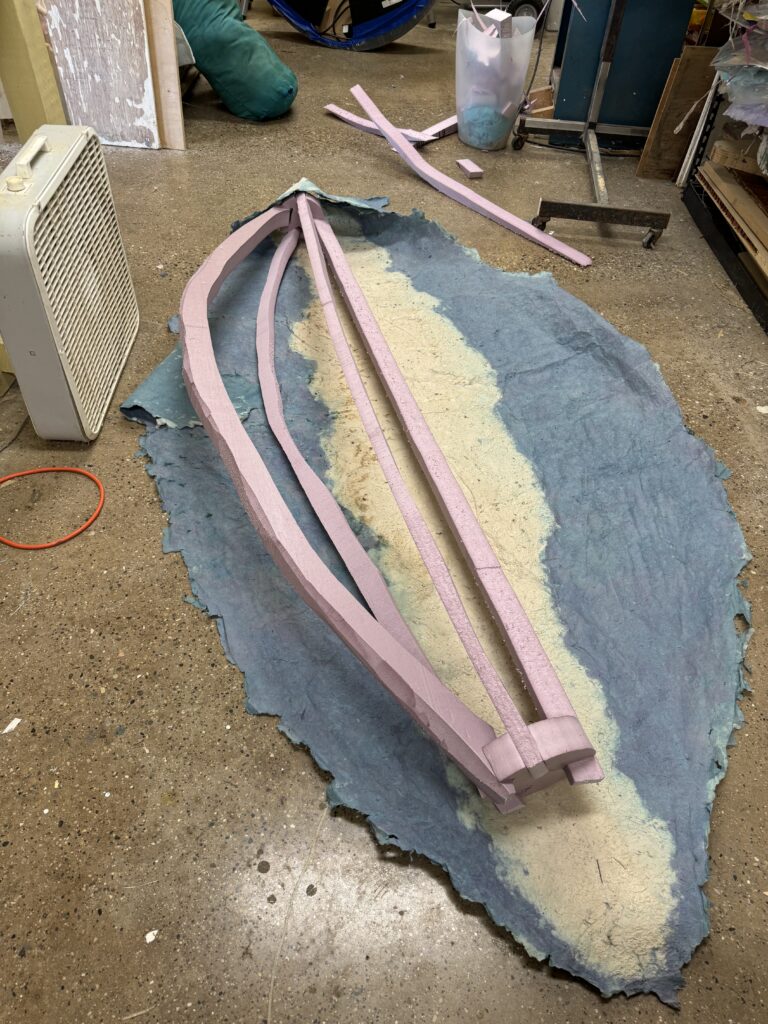
I had no idea how to create a 3D sculpture when I began. At a papermaking conference I’d attended a slide presentation on Chinese lantern construction, and afterward I studied the photos I’d taken of the slides until I could imagine how the structure worked. I started by making a flat handmade‑paper dolphin on the floor, then decided to build my mold from thick styrofoam instead of wood — partly because I already had some, and partly because it was cheaper, lighter, and far easier to cut. I held the form together with paper tape, carved notches along the sides for the reeds, and wound the reeds around the frame to create the curved body. I carefully glued handmade paper to the reed structure, letting the shape emerge. When the shell was strong enough, I cut the taped seam and pulled the styrofoam form out through the tail, piece by piece, leaving behind a hollow, fully handmade 3D dolphin.
Art Processes
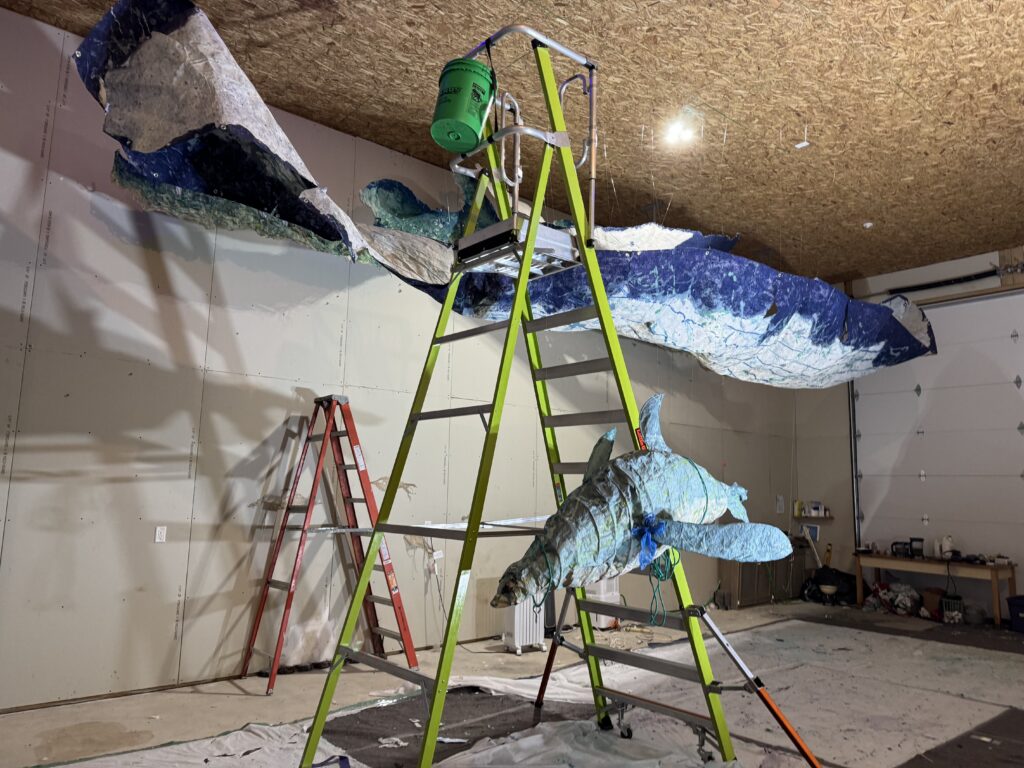
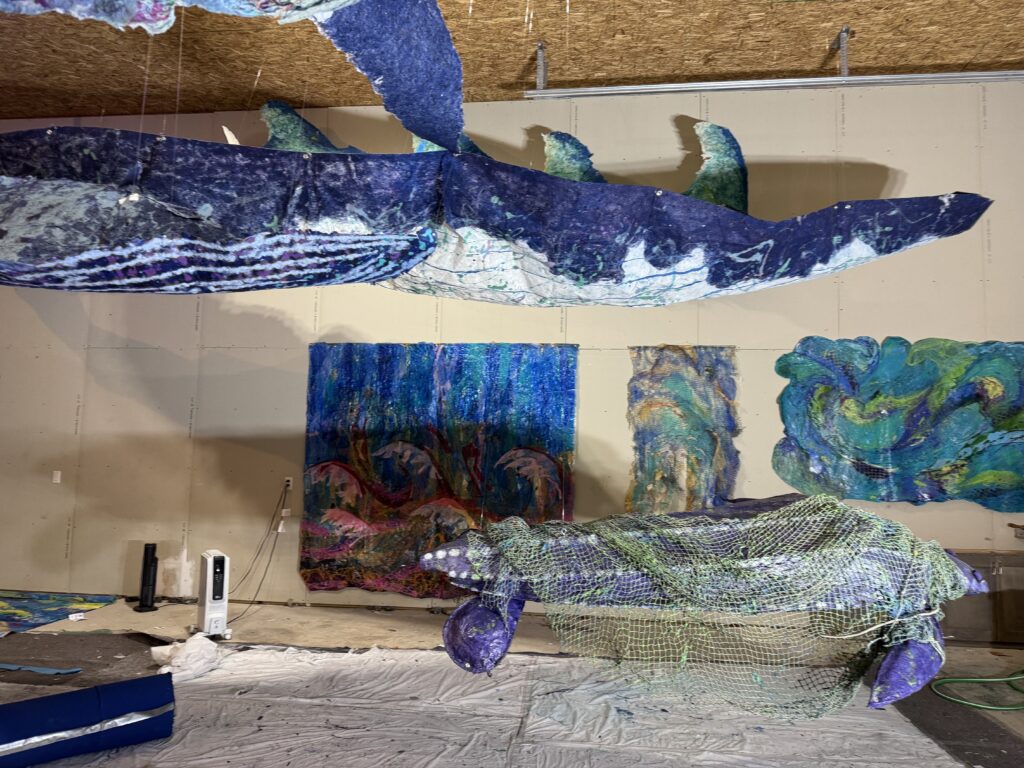
Back in Holland, I couldn’t even open the tube holding the whales and waves — my home studio was far too small to unroll, let alone continue the work. For three months I searched for a new space, and finally found a 30 × 40 × 16‑foot studio with a giant garage door, the first place big enough to breathe life back into the installation. I hung the whale on the wall, then realized I needed a massive ladder to lift it to the ceiling. Soon the dolphin, the leatherback sea turtle, and the small whale were suspended alongside it. I added the plastic fishing net I had already made, hung handmade papers and paintings along the walls, tucked twinkle lights into the nets, and layered in whale music. At last, the installation was complete. People came out on a cold Michigan night to experience it, and more groups visited over the following months. That September, the work traveled to ArtPrize in Grand Rapids and then to the Evanston Art Center near Chicago.